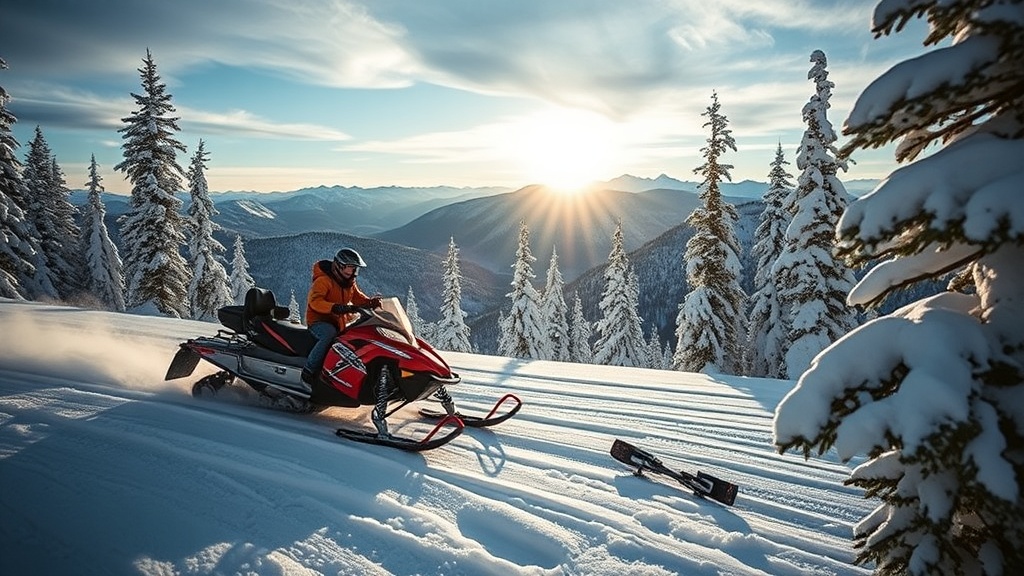
Breathe Better at Altitude: A Snowmobiler's Guide to Staying Strong All Day

Why Does Breathing Matter So Much When You're Riding High?
You're three hours into a backcountry ride, elevation pushing 8,000 feet, and your legs still feel solid—but something's off. Your reactions are slower, that technical section you'd normally thread without thinking now demands conscious effort, and your energy reserves seem to be draining faster than your fuel tank. Here's what most riders miss: at altitude, your breathing efficiency becomes the bottleneck that determines whether you finish strong or find yourself struggling through the final descent. Snowmobiling demands constant physical engagement—shifting your weight through powder, absorbing impacts from hidden terrain, maintaining active posture for hours on end. Add thin mountain air to the mix, and your respiratory system works overtime just to keep oxygen flowing to your muscles and brain. This isn't just about cardio fitness. Poor breathing mechanics compound fatigue, slow reaction times, and can even contribute to the mental fog that makes decision-making sketchy when you need it most. The good news? You can train your breathing like any other physical skill—and the payoff on the mountain is immediate.
What's Actually Happening to Your Body at High Altitude?
Before we talk technique, let's get clear on the physiological reality. At 8,000 feet, the air contains roughly 25% less available oxygen than at sea level. Your snowmobile doesn't care—it's sucking in the same air-fuel mixture regardless—but your body absolutely notices. Your heart rate increases to pump more oxygen-depleted blood. Your respiratory rate kicks up automatically. And if you're a coastal rider heading inland for a mountain trip, these effects hit harder and last longer than you'd expect. The kicker? Most riders compensate by breathing faster and shallower, which actually makes things worse. Shallow chest breathing recruits your neck and shoulder muscles—already working hard to control the bars—into the respiratory effort. That creates tension that radiates down your arms, affects your grip, and steals energy from where you actually need it. Meanwhile, you're not getting significantly more oxygen into your bloodstream anyway. This is why experienced mountain riders often seem to handle elevation better than fitter-but-less-acclimatized athletes. They've developed breathing patterns that maximize oxygen extraction without creating unnecessary muscular tension.
How Do You Breathe for Sustained Energy on Long Rides?
The foundation is diaphragmatic breathing—getting your body's primary respiratory muscle (the diaphragm) doing the work instead of recruiting your chest and shoulders as secondary helpers. Here's the practical version: place one hand on your belly, one on your chest. When you inhale, the belly hand should rise first; the chest hand should move minimally. Practice this lying down first, then progress to seated, then standing, then simulate riding posture. Your goal is a 360-degree expansion of your lower ribs—front, sides, and back—on every inhale. On the mountain, aim for a rhythm that matches your exertion without racing ahead of it. A solid baseline is nasal inhale for a count of four, relaxed exhale for a count of six. The longer exhale fully empties your lungs, which triggers a more efficient inhale reflex and keeps you from stacking partial breaths that never quite refresh your oxygen supply. When you're working hard—climbing a steep face, breaking trail through deep snow—you'll need more air. That's fine. Let the rate increase, but keep the pattern: belly-driven breaths that expand your lower ribs, not shallow chest gasps that tighten your neck and shoulders. This is where riders often go wrong—they let hard breathing become bad breathing, and the tension compounds until their whole upper body feels locked up by lunch.
The Recovery Breath You Can Use on the Fly
Here's a technique that works anywhere you've got thirty seconds: double exhale recovery. Take a normal breath in through your nose, then exhale fully through pursed lips like you're blowing out a candle. At the end of that exhale, squeeze out a little more air—there's always some left—and let the inhale happen naturally. Repeat three to five times. This pattern stimulates your parasympathetic nervous system (the "rest and digest" side) without requiring you to stop and meditate. Use it on trail breaks, after a technical section, or anytime you feel your breathing getting ragged and shallow. It resets your respiratory rhythm and prevents the shallow-breathing spiral that drains riders over the course of a day.
How Can You Train Your Breathing Before the Season Starts?
Breathing is trainable, and the adaptations transfer directly to mountain performance. Start with the basics: five to ten minutes of dedicated diaphragmatic breathing practice daily. This isn't meditation (though that's valuable too)—it's technique work. Focus on the physical sensation of your lower ribs expanding, your belly rising, your shoulders staying quiet. Progress to breath holds. Exhale fully, hold your breath, and resume normal breathing when you feel the first strong urge to breathe. Start with comfortable durations—twenty to thirty seconds—and build gradually. This trains your body to tolerate higher CO2 levels, which improves oxygen delivery to tissues and delays the panic response that kicks in when you're working hard at altitude. For snowmobile-specific conditioning, add breathwork to your strength training. Perform your sets while maintaining nasal breathing only. When that gets comfortable, extend your exhale phase during rest periods. This builds respiratory endurance under load—the exact demand your body faces when you're muscling a sled through variable terrain while processing thin air.
Gear Considerations That Affect Your Breathing
Your equipment choices matter more than you might think. A helmet that fits too tightly around the throat or jaw can restrict your airway when you're looking up (which happens constantly in mountain riding). Try this: put on your helmet, tilt your head back like you're looking up a steep climb, and take a deep breath. Any restriction? That's going to compound fatigue over a long day. Similarly, neck braces and high-collared jackets can create subtle postural restrictions that make belly breathing harder. You don't need to abandon protective gear—just be aware of how it interacts with your respiratory mechanics and adjust fit or positioning as needed. Heated gear is another consideration. Staying warm reduces the metabolic cost of thermoregulation, which leaves more oxygen available for muscular work and mental processing. Riders who skimp on layering often don't realize how much energy they're burning just to stay warm—energy that could be going toward better breathing efficiency and sharper riding.
What About Altitude Acclimatization for Traveling Riders?
If you're a lowlander heading to the mountains for a week-long trip, your breathing strategy becomes even more critical. Full acclimatization takes weeks, but you can accelerate the process. Arrive a day early if possible and do light activity—walking, easy hiking—to stimulate your body's altitude response without overloading it. Avoid the temptation to go hard on day one; that shallow, ragged breathing you develop on an aggressive first ride sets a pattern that can persist for days. Hydrate more than you think necessary. Altitude increases fluid loss through respiration, and dehydration thickens your blood, making oxygen transport less efficient. Your breathing becomes harder work for less payoff—a bad combination when you're already dealing with thin air. Most importantly, respect the signals. If you're finding yourself constantly breathless despite conscious technique adjustments, that's your body telling you to back off the intensity. Altitude affects everyone differently, and a pace that felt sustainable at home might be too aggressive up high. Better to ride slightly below your limit and finish energized than to push through, develop bad breathing habits, and struggle through the rest of your trip.
The riders who consistently perform best on multi-day mountain trips aren't necessarily the fittest—they're the ones who've learned to breathe efficiently under pressure. They don't waste energy on unnecessary muscular tension. They recover faster between demanding sections. And they maintain the mental clarity that comes from adequate oxygen supply to the brain when decision-making matters most. Your breathing is the one physical system you can consciously control that affects every other system in your body. On the mountain, that control is worth developing. For more on how altitude affects athletic performance, check out research from the University of Colorado on altitude physiology. The Mayo Clinic's guidance on altitude sickness prevention offers practical advice for anyone heading to elevation. And for deeper technique work, Outside Magazine's breakdown of breathing for outdoor athletes provides accessible training protocols you can start using today.