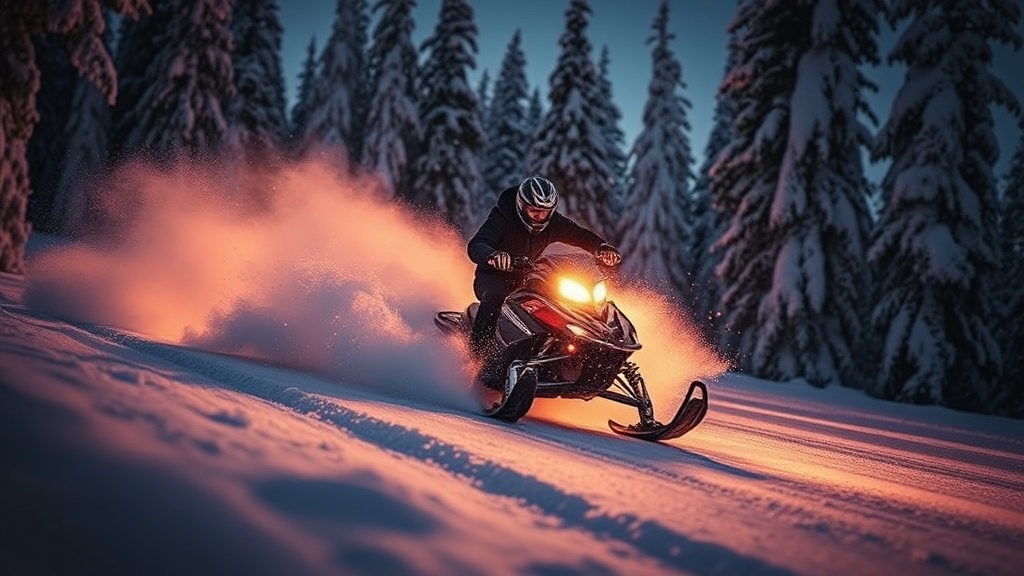
7 key Fitness Tips to Prepare Your Body for Snowmobiling Season

Build Core Strength for Better Balance and Control
Improve Cardiovascular Endurance for Long Trail Rides
Strengthen Your Legs to Handle Rough Terrain
Develop Upper Body Power for Steering and Maneuvering
Enhance Flexibility to Prevent Injuries on the Trails
Snowmobiling season demands more from the body than most riders expect. Long hours on the throttle, constant core engagement, and the physical toll of handling a 500-pound machine through variable terrain require targeted preparation. This guide covers seven specific fitness strategies that transform casual riders into capable ones—ready for full days on the trails without the next-day soreness that sends too many people indoors early.
Why Does Snowmobiling Require Specialized Fitness Training?
Snowmobiling taxes the body differently than typical gym workouts. Riders need sustained grip strength, rotational core power, and joint stability that running or cycling simply don't address. The trail throws unexpected challenges—quick direction changes, absorbing bumps through the legs, and maintaining posture while seated or standing for hours at a time.
Traditional cardio machines won't prepare the stabilizing muscles that fire continuously during a ride. The core works overtime to maintain balance. The legs absorb vibration and impact. The shoulders and forearms manage throttle control and steering input. Without specific preparation, fatigue sets in by midday—compromising reaction time and enjoyment.
The goal isn't bodybuilding aesthetics. Functional strength and endurance matter more. Riders who train specifically for snowmobiling extend their season, handle challenging terrain with confidence, and finish long rides still energized enough to enjoy the après-snowmobile atmosphere.
What Are the Best Core Exercises for Snowmobile Riders?
The best core exercises for snowmobile riders target anti-rotation, anti-extension, and rotational power—movements that mirror the demands of controlling a sled through turns and uneven terrain.
A standard plank won't cut it. Riders need dynamic stability that responds to shifting forces. These exercises build the specific core strength that translates directly to the seat:
- Pallof Press: Stand perpendicular to a cable machine or resistance band anchor. Hold the handle at chest height, step away to create tension, and press your hands forward without allowing rotation. This builds anti-rotation strength—the exact ability needed when the sled pulls you sideways through corners. Three sets of 12 reps per side, twice weekly.
- Dead Bug: Lie on your back, arms extended toward the ceiling, knees bent at 90 degrees. Slowly lower opposite arm and leg while keeping the lower back pressed to the floor. This develops lumbar stability for absorbing trail impacts. Perform 3 sets of 10 slow reps per side.
- Rotational Medicine Ball Throws: Stand facing a wall, hold a 6-10 pound medicine ball at hip height, rotate through the torso, and throw the ball against the wall. Catch and repeat. This builds rotational power for quick steering corrections. The Rogue Rubber Medicine Balls work well for this—designed to bounce predictably off walls without damaging surfaces.
- Farmer's Carries: Heavy, awkward loads carried for distance build the grip, core, and shoulder endurance that snowmobiling demands. Walk 40 yards with heavy dumbbells or kettlebells, maintaining perfect posture. Rest and repeat.
Here's the thing: most riders skip dedicated core work entirely. They assume general fitness covers it. The catch? A weak core transfers trail impacts directly to the spine and causes premature fatigue in the shoulders and arms as they compensate. Worth noting—core training doesn't require hours. Twenty minutes, twice weekly, done consistently for six weeks before season opening, creates noticeable differences on the trail.
How Much Cardio Do You Need for a Full Day on the Trails?
Thirty to forty-five minutes of moderate-intensity cardio, three times weekly, provides sufficient baseline endurance for recreational snowmobiling. Riders planning aggressive mountain riding or full-day expeditions should build toward 60-minute sessions with interval training components.
The cardiovascular demands of snowmobiling surprise many newcomers. High elevation (many prime riding areas sit above 5,000 feet), cold air that constricts airways slightly, and the isometric nature of holding riding positions all increase heart rate beyond what the seated posture suggests. A rider's heart rate during active trail riding typically hovers between 60-75% of maximum—similar to a brisk hike with a loaded pack.
Specific cardio modalities that transfer well to snowmobiling:
- Incline Walking or Hiking: Mimics the lower-body endurance and calf engagement needed for standing riding positions. The treadmill maxed at 15% incline works when trails aren't accessible.
- Rowing Machine: Builds posterior chain endurance and grip simultaneously—two critical capacities for snowmobiling. The Concept2 RowErg remains the standard for reliable, low-impact conditioning.
- Stationary Bike with Standing Intervals: Alternate seated and standing positions to simulate the postural changes of trail riding. Many riders default to seated riding, but standing provides better visibility and shock absorption—if the legs have the endurance to maintain it.
That said, steady-state cardio alone isn't enough. Interval training—alternating one minute of hard effort with two minutes of recovery—prepares the body for the variable intensities of trail riding. Steep climbs demand more oxygen. Technical sections spike the heart rate. Recovery sections allow it to settle. Interval training mimics these fluctuations.
What Strength Training Movements Transfer Directly to Snowmobile Control?
Snowmobile control demands three primary movement patterns: hip hinge mechanics for absorbing impacts, upper back strength for steering use, and grip endurance for throttle management. Target these specifically.
The following table breaks down the most effective exercises, their snowmobiling application, and recommended programming:
| Exercise | Snowmobiling Application | Sets x Reps | Equipment |
|---|---|---|---|
| Romanian Deadlift | Hip hinge pattern for absorbing bumps; hamstring and glute power for standing positions | 3 x 8-10 | Barbell or heavy dumbbells |
| TRX Rows or Bent Rows | Upper back strength for pulling the sled through turns and counter-steering | 3 x 10-12 | TRX suspension trainer or barbell |
| Goblet Squats | Leg endurance for prolonged standing; core bracing under load | 3 x 12-15 | Single heavy dumbbell or kettlebell |
| Face Pulls | Rear shoulder and upper back endurance for maintaining posture against wind resistance | 3 x 15-20 | Cable machine or resistance band |
| Wrist Roller | Forearm endurance for throttle control and brake modulation | 3 x full roll up/down | Wrist roller with 5-10 lbs |
| Suitcase Carries | Anti-lateral flexion for maintaining upright posture when the sled pulls sideways | 3 x 40 yards per side | Heavy dumbbell or kettlebell |
Programming these movements twice weekly, with at least 48 hours between sessions, builds the strength base without excessive bulk. The goal isn't moving maximum weight—it's building work capacity that lasts six hours on the trails.
How Should You Prepare for Elevation and Cold Weather Physiology?
Acclimatization to elevation requires 2-3 days at altitude for full adaptation, but riders can prepare through heat training and respiratory muscle training in advance. Cold weather physiology demands attention to hydration, fueling, and extremity circulation that many riders overlook.
High-elevation riding—common in destinations like Whistler, British Columbia or the Colorado backcountry—reduces available oxygen. Riders arriving from sea level experience improved heart rates, faster fatigue, and sometimes altitude sickness symptoms. Two strategies help:
First, arrive at riding elevation at least 48 hours before intense trail days. Light activity—walking, easy stretching—promotes acclimatization better than complete rest. Second, consider respiratory muscle training using devices like the POWERbreathe in the weeks before travel. These devices strengthen the diaphragm and intercostal muscles, reducing the work of breathing at altitude.
Cold weather creates its own physiological challenges. Blood vessels in extremities constrict to preserve core temperature, reducing fine motor control in fingers—problematic for throttle and brake modulation. The body burns more calories maintaining temperature, increasing fuel needs. Dehydration accelerates because cold air holds less moisture, increasing respiratory water loss, and riders rarely feel thirsty in the cold.
Preparation strategies:
- Train outdoors in cooler weather when possible, allowing the body to adapt its temperature regulation
- Practice eating and drinking on schedule regardless of thirst or hunger cues—the cold suppresses both
- Include cold-water immersion or contrast showers in training to improve circulation response (start gradually; 30 seconds cold, building to 2-3 minutes)
- Test all gear—gloves, boots, base layers—during training rides to identify circulation issues before long trips
What's the Ideal Training Timeline Before Season Opens?
Six to eight weeks of structured preparation provides noticeable improvements in riding performance and comfort. Riders new to fitness training should start 12 weeks out; those with consistent training backgrounds can compress this to 4-6 weeks of snowmobile-specific work.
The training block progresses through distinct phases:
Weeks 1-2: Movement Pattern Establishment
Focus on exercise technique and identifying weak points. Use moderate weights. Emphasize the core exercises and cardio base. This isn't the time for intensity—it's preparation for intensity.
Weeks 3-5: Volume Accumulation
Increase training volume gradually. Add distance to cardio sessions. Add sets or reps to strength work. The body adapts to the total workload. Some muscle soreness is normal; joint pain is not—distinguish between them.
Weeks 6-7: Intensity and Specificity
Reduce volume slightly while increasing intensity. Heavier weights. Faster paces. Shorter rest periods. Practice longer continuous sessions that mimic full trail days. If possible, find preseason riding opportunities to test fitness in specific contexts.
Week 8: Taper and Maintenance
Reduce training volume by 40-50% while maintaining intensity. This allows full recovery and supercompensation—the fitness gains consolidate. Enter the first big riding weekend fresh, not fatigued from training.
Here's the thing: life interferes. Work demands, family obligations, weather. The training timeline assumes consistent execution. When missed sessions occur, don't cram—just resume where you left off. Fitness is the accumulation of consistent work, not any single session.
How Do You Maintain Fitness During the Season?
Two 30-minute maintenance sessions weekly preserve pre-season gains through the riding season. These sessions focus on movement quality, core activation, and addressing the specific imbalances that long hours on the sled create.
In-season training differs from pre-season preparation. The goal shifts from building capacity to maintaining it—and preventing the postural problems that develop from prolonged sitting and repetitive steering motions.
Session structure (twice weekly, non-consecutive days):
- Movement Prep (5 minutes): Dynamic stretches emphasizing hip flexor lengthening (they shorten from seated riding) and thoracic spine rotation (it stiffens from forward posture).
- Core Activation (10 minutes): Dead bugs, bird dogs, and side planks. Low intensity, perfect form. These maintain the anti-rotation and anti-extension strength that degrades first when training stops.
- Hip and Upper Back Strength (10 minutes): Single-leg Romanian deadlifts (lighter than pre-season, emphasizing balance), face pulls, and band pull-aparts. High reps, controlled tempo.
- Grip and Forearm Maintenance (5 minutes): Wrist roller work or simple hangs from a pull-up bar. The constant grip demands of throttle and brake control require ongoing attention.
The catch? Many riders abandon all training once the snow flies. They ride hard all weekend, then sit idle all week. The body deconditions rapidly—studies show measurable strength loss in as little as two weeks of detraining. Maintenance requires minimal time but preserves the investment made during pre-season preparation.
Worth noting: active recovery between riding days outperforms complete rest. Light walking, gentle stretching, or yoga sessions promote circulation, clear metabolic waste, and prepare the body for the next trail day. The riders who finish strong in March are those who maintained their bodies through the season—not those who burned brightest in December.
Snowmobiling rewards physical preparation. The machine does the propulsion, but the rider does everything else—absorbing terrain, making split-second corrections, maintaining focus for hours. Riders who commit to specific, progressive fitness preparation find themselves riding longer, recovering faster, and accessing terrain that fitness limitations previously prohibited. The season is short. Make the most of every mile.