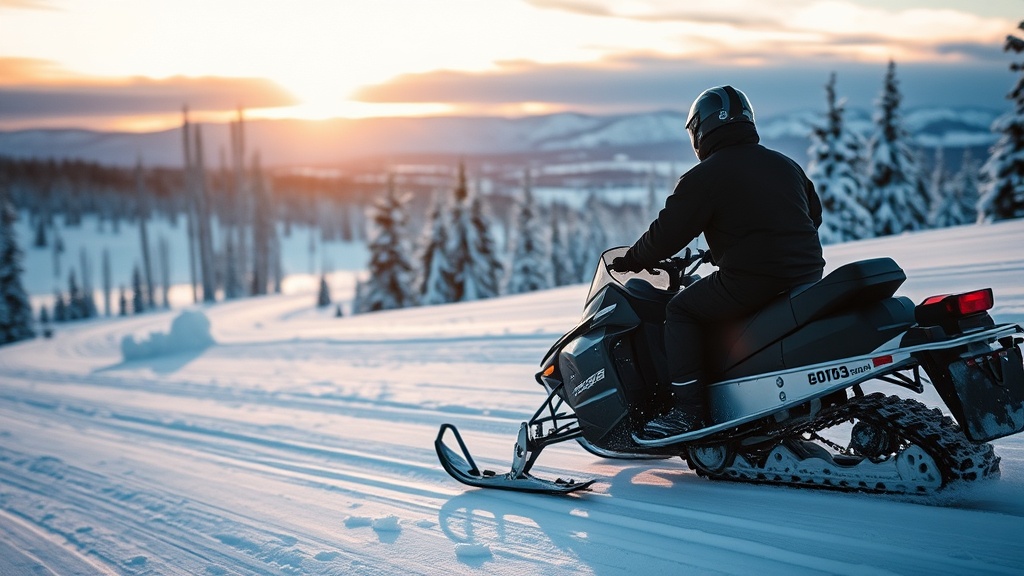
5 key Training Exercises to Boost Your Snowmobiling Endurance

Plank Variations for Core Stability on Rough Terrain
Squats and Lunges to Build Leg Strength for Control
Cardio Conditioning for All-Day Trail Endurance
Balance Board Drills to Improve Rider Stability
Upper Body Workouts for Handling Your Sled with Ease
Long days on the trail demand more than enthusiasm. This post breaks down five targeted training exercises that build the stamina, core strength, and balance you'll need for back-to-back snowmobiling sessions. Whether you're planning a weekend trip to Whistler or a multi-day expedition through the Rockies, these workouts will keep you riding strong when fatigue starts setting in for everyone else.
Why Does Snowmobiling Require Specific Endurance Training?
Snowmobiling taxes your body in unique ways. You're not just sitting there. The machine bucks, vibrates, and requires constant micro-adjustments through your legs, core, and upper body. A typical ride involves prolonged isometric holds — your thighs burning from absorbing bumps, your forearms locked around the handlebars, your core engaged to maintain posture on uneven terrain.
Here's the thing: general cardio fitness helps, but it won't prepare you for the specific demands of controlling a 500-pound machine across varied snow conditions. You need targeted preparation. The exercises below address the three pillars of snowmobile fitness — leg endurance, core stability, and grip strength — while building cardiovascular capacity that won't quit when you're miles from the trailhead.
What Are the Best Leg Exercises for Snowmobiling Stamina?
The best leg exercises for snowmobiling focus on isometric holds, explosive power, and endurance under load — think wall sits, Bulgarian split squats, and weighted step-ups that mimic the seated-riding position.
1. Wall Sits with Heel Raises
This exercise replicates the quad-burning position you'll hold for hours on the sled. Find a flat wall. Slide down until your thighs are parallel to the floor, knees at 90 degrees. Hold your arms out in front — like gripping handlebars. Now lift your heels, hold for three seconds, lower, and repeat.
Start with three sets of 45 seconds. Work up to two minutes. The heel raises target your calves and ankles — the unsung heroes that absorb trail chatter and help you stand on the running boards when the terrain gets technical.
The catch? Most riders skip this because it looks too simple. Don't. The burn you'll feel at 90 seconds mirrors exactly what happens on hour three of a powder day.
2. Bulgarian Split Squats
This unilateral movement corrects muscle imbalances while building the single-leg strength needed for weight shifts and carving. Place your back foot on a bench or box (about knee height). Step forward into a lunge position. Lower your back knee toward the floor, keeping your front knee tracking over your toes.
Aim for three sets of 10-12 reps per leg. Add dumbbells once bodyweight becomes manageable. The Rogue Rubber Hex Dumbbells work well here — the hex shape keeps them stable when you set them down between sets.
How Can You Build Core Strength for Snowmobile Control?
Core strength for snowmobile control comes from anti-rotation and anti-extension exercises that teach your body to resist forces — exactly what happens when the sled tries to throw you sideways or the handlebars torque against your grip.
3. Pallof Press with Rotation
Attach a resistance band to a fixed point at chest height (a fence post works outdoors, or use a cable machine at the gym). Stand perpendicular to the anchor point, holding the band at your chest. Press your arms straight out, resisting the band's pull to rotate your torso. Hold for two seconds. Bring your hands back to your chest. That's one rep.
Perform three sets of 12-15 reps per side. The band tries to twist you — your core fights to keep you facing forward. This translates directly to maintaining control when your sled hits uneven drifts or you need to counterbalance through a turn.
Worth noting: start with a lighter band than you think you need. Form matters more than resistance here. The Rogue Monster Bands offer good progression options from light to heavy resistance.
4. Dead Bug Variations
Lie on your back, arms extended toward the ceiling, legs raised with knees bent at 90 degrees. Slowly lower one arm behind your head while extending the opposite leg — but don't let your lower back arch off the floor. Return to start, then switch sides.
Some riders find this too easy. Add a stability ball between your opposite arm and leg. Squeeze it throughout the movement. This forces deeper core engagement and builds the coordination between upper and lower body that snowmobiling demands.
Do three sets of 10 slow reps per side. Count three seconds down, pause, three seconds up. The tempo matters — snowmobiling isn't about explosive bursts (mostly). It's about sustained, controlled effort.
What Grip and Upper Body Training Helps Most for Riders?
The most effective grip and upper body training for snowmobiling combines static holds with dynamic pulling movements — farmer's carries, pull-ups, and specific grip work that prepares your forearms for hours of handlebar vibration and throttle control.
5. Farmer's Carries with Fat Grips
Grab two heavy dumbbells or kettlebells. Walk — don't run — for 40-60 seconds. Keep your shoulders pulled back, core tight, and grip crushing the handles. The key upgrade for snowmobilers: add Fat Gripz to the handles. These rubber sleeves thicken the grip diameter, forcing your forearms to work harder.
This exercise builds the exact endurance your hands need for long rides. Your grip is often the first thing to fail — not your legs, not your cardio. When your forearms pump out, you can't control the throttle smoothly, can't brake effectively, can't steer precisely. That's when accidents happen.
Start with three sets of 40 seconds. Progress by adding weight, time, or grip thickness. The goal isn't to move fast — it's to hold on when everything in your body wants to let go.
Training Schedule: How to Structure Your Prep
Consistency beats intensity. Here's a practical weekly structure that won't consume your life but will get you trail-ready:
| Day | Focus | Exercises | Duration |
|---|---|---|---|
| Monday | Legs + Cardio | Wall sits, Bulgarian split squats, 20 min cycling | 45 min |
| Tuesday | Core + Grip | Pallof press, dead bugs, farmer's carries | 35 min |
| Wednesday | Active Recovery | Light hiking, swimming, or yoga | 30-45 min |
| Thursday | Full Body Strength | All five exercises at moderate intensity | 50 min |
| Friday | Cardio Endurance | Trail running, rowing, or stair climbing | 40 min |
| Saturday | Active Recreation | Snowshoeing, cross-country skiing, or actual riding | Variable |
| Sunday | Rest | Stretching, foam rolling | 20 min |
That said — don't treat this as gospel. Life happens. If you can only train three days weekly, hit legs twice and core/grip once. Something beats nothing, always.
Nutrition and Recovery: The Overlooked Factors
You can train perfectly and still bonk on the trail. Snowmobiling in cold weather burns more calories than most people realize — your body works overtime just to maintain temperature. Dehydration sneaks up on you too (you don't feel thirsty when it's cold).
Pack calorie-dense snacks — mixed nuts, jerky, energy bars that won't freeze solid. The CLIF Bar Sierra Trail Mix stays reasonably chewable in sub-zero temps. Bring an insulated water bottle — don't rely on snow for hydration unless you've got purification tablets and time to melt it.
Sleep matters as much as training. Most recovery and adaptation happens during deep sleep. Seven hours minimum, eight preferred. Your grip strength, reaction time, and decision-making all degrade significantly after even one short night — not what you want when you're threading through trees at speed.
Real-World Application: A Sample Pre-Season Month
Here's how this looks in practice — Marcus Abdi's own pre-season routine before heading to the Whistler backcountry:
Weeks 1-2: Base building. Focus on form and consistency. Weights stay moderate. You're teaching your nervous system the movement patterns. Don't chase soreness.
Weeks 3-4: Add volume. Extra set per exercise. Extend wall sit times. Increase carry distances. Your body adapts — you need progressive overload to keep improving.
Week 5: Intensity peak. Heavier weights, shorter rest periods. Test your limits in controlled conditions.
Week 6: Taper. Reduce volume by 40%, maintain intensity. You want to arrive at the trailhead fresh, not fatigued from training.
"The best training for snowmobiling is snowmobiling — but you can't ride year-round in most places. These exercises keep you ready so that first ride of the season doesn't wreck you for a week."
Equipment recommendations from years of testing: For home gyms, the Rogue SML-2C Squat Stand handles everything here without eating your whole garage. A simple set of resistance bands and a pair of kettlebells covers most riders' needs. You don't need a commercial gym membership — just consistency, progressive overload, and the discipline to show up when the couch calls your name.
The trail doesn't care about your excuses. Neither does a 500-pound machine sliding sideways down an icy slope. Put in the work now — the powder, the views, and the satisfaction of riding strong all day await.