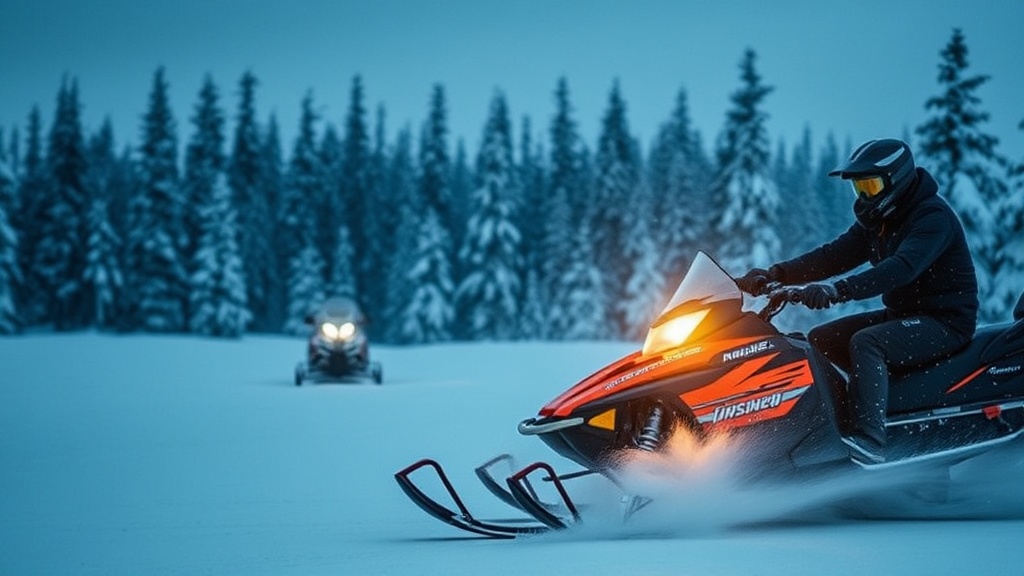
5 key Fitness Drills to Prepare Your Body for Snowmobiling Season

Plank Variations for Core Stability on Rough Terrain
Squat Patterns to Build Leg Strength for Long Rides
Grip Strength Exercises for Better Handlebar Control
Cardio Intervals to Boost Endurance at High Altitude
Balance Training to Prevent Falls on Icy Trails
Snowmobiling demands more from the body than most riders expect. Long days on the trails require core stability, leg endurance, and upper body strength to maintain control through rough terrain and variable conditions. This guide breaks down five targeted fitness drills that build the specific physical capacities needed for a full season of confident, comfortable riding. Whether you're a weekend warrior or planning multi-day backcountry expeditions, these exercises will prepare the body for the unique challenges ahead.
What Muscles Does Snowmobiling Actually Work?
Snowmobiling engages the entire body in ways that surprise first-time riders. The core maintains posture and absorbs impacts. The legs stabilize against lateral forces and manage body positioning. The upper body controls the handlebars, especially in deep snow or when maneuvering at low speeds.
Here's the thing: recreational snowmobiling isn't gentle cruising. Trail riding involves constant micro-adjustments. Off-trail riding—boondocking through trees, climbing hills, sidehilling across slopes—demands explosive power and sustained grip strength. Riders who skip preseason conditioning often find their hands cramping, their lower backs aching, and their quads burning after just a few hours.
The drills below target these specific demands. They aren't generic gym routines. Each exercise addresses movement patterns and stress points unique to snowmobiling.
Drill #1: The Modified Turkish Get-Up for Core and Shoulder Stability
The Turkish get-up builds the kind of total-body coordination that translates directly to snowmobile control. This modified version emphasizes the positions most relevant to riders.
Start lying on your back, holding a kettlebell (or dumbbell) in one hand, arm extended toward the ceiling. Roll onto the opposite elbow, then push up to your hand. Sweep the straight leg underneath into a kneeling position, then stand. Reverse the movement to return to the floor.
The catch? Don't rush. Each phase matters. The shoulder stability protects against handlebar fatigue. The rolling motion mirrors how riders recover from awkward positions. The get-up also exposes imbalances—most people have one side significantly weaker, which becomes obvious when controlling a 500+ pound machine through uneven terrain.
Programming: 3 sets of 3 reps per side, 2-3 times weekly. Start light—16kg for men, 8-12kg for women—and prioritize perfect form over weight.
Is Cardio Training Necessary for Snowmobiling?
Yes—though not for the reasons most riders assume. Snowmobiling itself isn't cardiovascularly demanding in the way running or cycling is. The machine does the work. However, the sport's stop-and-start nature, combined with altitude exposure and cold stress, places significant demands on the aerobic system.
More importantly, poor cardio conditioning leads to rapid fatigue. Fatigued riders make mistakes. Mistakes in avalanche terrain or at speed become serious fast.
Interval training best mimics snowmobiling's demands. Unlike steady-state cardio (long jogs, bike rides), intervals train the body to recover quickly between bursts of effort—exactly what happens when you handle a technical section, then cruise, then hit another challenging stretch.
| Cardio Method | Best For | Sample Weekly Volume |
|---|---|---|
| Rowing machine intervals | Total body conditioning, grip endurance | 2 sessions, 20 minutes each |
| Trail running on varied terrain | Ankle stability, impact absorption | 1-2 sessions, 30-45 minutes |
| Air bike (Assault Bike or similar) | High-intensity intervals, mental toughness | 1 session, 15-20 minutes |
| Hiking with weighted pack | Altitude preparation, backcountry readiness | 1 long session, 60+ minutes |
Worth noting: the rowing machine deserves special attention. It builds the posterior chain (hamstrings, glutes, back) while training the grip and requiring core engagement throughout. The Concept2 RowErg remains the gold standard for this type of training—durable, consistent, and widely available in gyms.
Drill #2: Trap Bar Deadlifts for Total Body Power
Snowmobiling requires repeated lifting, pulling, and stabilizing against resistance. The trap bar deadlift develops the hip hinge pattern, grip strength, and posterior chain power that makes these tasks manageable.
The trap bar (hex bar) keeps the load centered, reducing shear stress on the lower back compared to conventional barbell deadlifts. This matters for riders who may already have back concerns—or who want to avoid developing them.
Set up with feet hip-width apart, chest up, neutral spine. Grip the handles and stand tall, driving through the mid-foot. Lower with control. The movement should feel powerful, not strained.
That said, technique failures become expensive fast. Film yourself from the side. If your hips shoot up first—turning the deadlift into a back-dominant good morning—drop weight and rebuild the pattern. A rounded back under load risks injury that could sideline the entire season.
Programming: 3 sets of 5 reps at a challenging but technically perfect weight. Progress gradually—5-10 pounds per week if recovering well.
How Do You Prevent Hand and Forearm Fatigue While Riding?
Forearm pump—the burning, cramping sensation in the hands and forearms—ruins riding days. It happens when grip demand exceeds grip capacity. Modern snowmobiles with updated handlebars and reduced vibration help, but the fundamental issue remains: most riders have weak grip relative to the sport's demands.
The solution isn't more riding. It's specific grip training integrated into regular workouts.
Farmer's Carries
Simple and brutal. Grab heavy dumbbells or kettlebells—roughly half your bodyweight total is a reasonable starting point for experienced trainees—and walk. The goal isn't distance covered; it's time under tension. Keep shoulders packed, walk tall, and don't put the weights down until your grip absolutely forces it.
Programming: 3-4 sets of 40-60 meter carries, or timed sets of 45-60 seconds. Rest fully between sets.
Dead Hangs
Hang from a pull-up bar with straight arms. This builds the static grip endurance needed for long descents where you're constantly feathering the brake and throttle. Start with 30-second hangs. Work toward 90 seconds.
Programming: Accumulate 3-5 minutes of hanging time per session, broken into as many sets as needed.
Plate Pinches
Squeeze two weight plates together (smooth sides out) and hold for time. Start with 10-pound plates. Progress to 25s when 10s become manageable. This targets the thumb and finger strength that regular gripping misses.
Programming: 3 sets of 30-45 seconds.
Drill #3: Single-Leg Romanian Deadlifts for Balance and Hip Stability
Snowmobiling is a unilateral sport. Each leg works independently to stabilize against terrain. The single-leg Romanian deadlift (RDL) develops the hip stability, hamstring strength, and proprioception that keep riders planted and controlled.
Stand on one leg, holding a dumbbell or kettlebell in the opposite hand. Hinge at the hips, keeping the back flat and the non-working leg extending behind. Lower until you feel a stretch in the hamstring of the standing leg, then return to standing.
The movement reveals weaknesses quickly. Most people wobble, rotate, or lose balance. That's information—it highlights exactly what needs work. A rider who can't stabilize a single-leg RDL with 20 pounds will struggle to maintain body position when their sled hits an unexpected drift or catches an edge.
Programming: 3 sets of 8-10 reps per leg. Use a weight that challenges the final 2-3 reps while maintaining perfect balance. No touch-downs allowed.
What About Neck and Upper Back Strength?
This gets overlooked until it's a problem. Snowmobile helmets weigh 3-4 pounds. Add goggles, and you're holding significant weight on your head for hours. The riding position—leaning forward, head up to see over the windshield—places sustained load on the neck extensors and upper back.
Weakness here creates the "snowmobile headache"—tension headaches that start at the base of the skull and radiate forward. It also contributes to poor posture, which compounds back pain and reduces reaction time.
Neck Plank (Prone Cobra)
Lie face down, arms at sides. Lift your chest, arms, and head off the floor, squeezing the shoulder blades together. Hold for 20-30 seconds. This directly targets the postural muscles that fight helmet weight.
Face Pulls
Using a cable machine or resistance band at face height, pull toward your face with elbows high and external rotation at the shoulders. This strengthens the rear deltoids and upper back while opening the chest—counteracting the hunched-forward riding posture.
Programming: 3 sets of 15-20 reps for face pulls, 3 sets of 30-second holds for neck planks.
Drill #4: Step-Ups for Leg Endurance and Trail Readiness
Getting unstuck—lifting the back end, side-hilling, maneuvering in tight trees—requires single-leg strength and endurance. The step-up, done properly, builds exactly that.
Use a box or bench 16-20 inches high. Step up with one leg, driving through the heel. Bring the trailing leg up without pushing off it—this ensures the working leg does all the work. Step down under control. Alternate legs or complete all reps on one side before switching.
The key is weight placement. Hold dumbbells at your sides or wear a weighted vest. Keep the chest up—don't lean forward, which turns the step-up into a hip-dominant movement. The goal is quad and glute endurance, not just getting onto the box.
Programming: 3 sets of 10-12 reps per leg with challenging weight. Rest 90 seconds between sets.
Drill #5: Anti-Rotation Core Training for Stability
Crunches won't help your riding. The core's job during snowmobiling isn't flexion (bending forward)—it's anti-movement. Resisting rotation, extension, and lateral flexion while the sled bucks beneath you.
Pallof presses train this directly. Stand perpendicular to a cable machine or resistance band anchor, holding the handle at chest height. Press the arms straight forward—the band will try to rotate your torso. Resist. Bring hands back to chest. That's one rep.
The movement teaches the core to stabilize against rotational forces—the exact demand placed on riders when cornering, traversing sidehills, or absorbing impacts from moguls and tree roots.
Programming: 3 sets of 12-15 reps per side. Use a band or weight that makes the final reps genuinely difficult to complete without rotation.
Putting It Together: A Sample Weekly Template
Consistency beats intensity. Two dedicated strength sessions per week, plus regular cardio and grip work, will transform riding readiness within 6-8 weeks.
Day 1 (Strength)
- Trap bar deadlifts: 3x5
- Step-ups: 3x10 each leg
- Single-leg RDLs: 3x8 each leg
- Pallof presses: 3x12 each side
- Farmer's carries: 3x60 meters
Day 2 (Strength)
- Modified Turkish get-ups: 3x3 each side
- Face pulls: 3x15
- Neck planks: 3x30 seconds
- Dead hangs: accumulate 3 minutes
- Plate pinches: 3x30 seconds
Cardio (2-3 days weekly)
Rotate between rowing intervals, trail running, and hiking with a weighted pack. Keep one session longer and easier (zone 2 intensity), one shorter and harder (intervals).
For riders serious about preparation, the Avalanche Canada training courses offer invaluable education on backcountry safety—fitness means little without the knowledge to apply it safely in avalanche terrain.
Another resource worth bookmarking: MotoUSA provides detailed snowmobile reviews and riding technique articles that complement physical preparation with technical skill development.
Start now. Six weeks of consistent training separates the riders who finish strong from those who tap out early. The snow will fly sooner than expected—and when it does, the prepared body opens possibilities that fitness limitations would otherwise close.